The Best Time to Visit the Blue Mountains
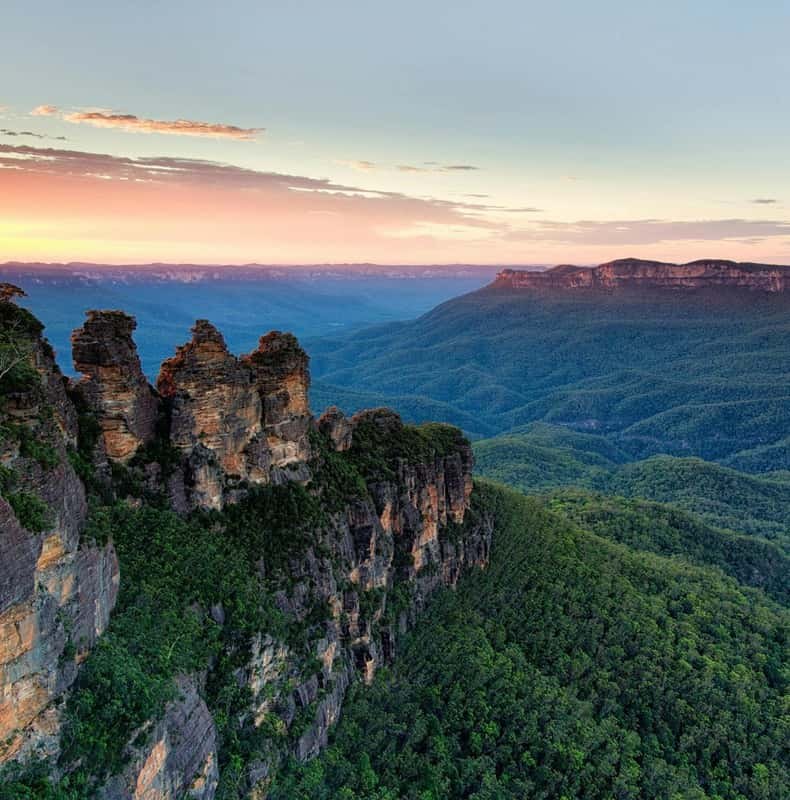
In short
May to September for the clearest air: September averages 70.7mm of rain and August 79.3mm, the two driest months, and they are also the coldest. November to February for warmth and long evenings, and for the four wettest months on the record. Autumn, March to May, is the compromise. Whatever month you pick, Katoomba runs about five degrees below Sydney, every time.
The one number that governs the whole year
Altitude. The Bureau of Meteorology's Katoomba station sits at 1,017 metres against Sydney's 39, and the consequence shows up in every month of the record: about five degrees colder by day and closer to six overnight. In July the daytime gap is 6.9 degrees, with Katoomba at 9.5°C against Sydney's 16.4°C.
That is why picking a month here is a real decision rather than a preference, and why every operator's packing list says the same three things. The Blue Mountains tours from Sydney all run year-round, so the month is yours to choose rather than theirs.
Which month is driest?
September, at 70.7mm across 7.4 wet days, followed by August at 79.3mm and July at 84.9mm. The pattern is worth stating plainly because it inverts what people expect: the coldest months here are also the driest and the clearest. Summer is the wet season.
| Season | Rainfall | Days by | Nights | What you get |
|---|---|---|---|---|
| Summer (Dec–Feb) | Highest, 120–178mm | 22–23°C | 12–13°C | Long light, late sunsets, storms |
| Autumn (Mar–May) | Falling, 100–175mm | 13–20°C | 6–12°C | Waterfalls running, crowds easing |
| Winter (Jun–Aug) | Lowest, 79–116mm | 9.5–11°C | 2.6–3.7°C | The sharpest views of the year |
| Spring (Sep–Nov) | Rising, 71–110mm | 15–21°C | 5.5–10°C | September is the quiet sweet spot |
Is winter really the best time?
For views, yes, and it is the answer most people do not expect. July and August carry the lowest rainfall and the clearest air, and a cold, still winter morning on this escarpment is as good as it gets. You will need a proper coat: Katoomba's July overnight mean is 2.6°C.
What winter costs you is daylight. Sunset comes early, so the late-start departures leave later in the morning and still finish before it is properly dark. If a long evening matters, this is the wrong half of the year.
What is wrong with summer?
Nothing, provided you know what you are buying. December through February are the warmest and by some distance the wettest: February alone averages 177.8mm across 11.2 wet days. Afternoon storms are normal and the valleys fill with cloud after them.
What summer gives you is light. The sunset departures return latest now, as late as ten at night at the height of it, which is either the best thing about the season or a scheduling problem depending on who you are travelling with. Fire danger also becomes a real consideration from November, and the park may close at short notice when it is high.
When is it quietest?
September, on the figures and on the calendar. It has the lowest rainfall of the twelve months, rising temperatures, long enough light, and no school holidays in it. April is the counter-example: rainfall drops by a third from March, which sounds ideal, but school holidays fill the Glenbrook entry station and put a queue on the Giant Stairway.
Does fog really ruin a day?
It can, and it is worth being straight about it. The lookouts face across valleys several hundred metres deep, and when cloud fills those valleys there is nothing to look at. The lowest-rated reviews across several operators all describe the same thing: thick mist, a guide doing his best, and no view.
Tours run in it rather than cancelling and no refund follows a poor view. The lever you have is free cancellation up to twenty-four hours ahead, which all but one departure offers. Watch the Katoomba forecast rather than the Sydney one, decide the day before, and rebook if it looks bad. The month-by-month page has the wet-day counts.
What about snow?
It happens in the upper mountains in winter and it is not something to plan a trip around. Katoomba's July mean maximum is 9.5°C, which is cold rather than freezing, and the record is one of occasional falls rather than a season. If it does snow while you are here, the escarpment under it is extraordinary; treat it as a bonus rather than an itinerary.
Which is the best hour of any day?
Two of them, and they are different days rather than different hours. Before ten in the morning the Sydney coaches have not arrived, and Echo Point is quiet. In the last hour of light the west-facing lookouts — Lincoln's Rock, Sublime Point, Cahill's — do the thing they exist for. Between noon and three the light is flat and the car parks are full.
An early departure buys you the first; a late one buys you the second. You cannot have both on one day from Sydney, which is why both kinds exist.
Does the season change which tour to book?
Yes, in one specific way. In summer the late departures return as late as ten at night, which suits some travellers and not others, and the start time itself moves with daylight saving. In winter the same tours leave later and finish earlier, which makes them easier to plan around. Everything else runs to the same shape year-round.
If your dates are fixed and the forecast is poor, the attractions day holds up best: a railway through rainforest and a wildlife park are indifferent to cloud, while a sunset itinerary has exactly one job. The things-to-do page sorts the alternatives by how long you have.
When are the waterfalls at their best?
March, on the figures. Katoomba averages 174.6mm of rain that month across 11.4 wet days, and the creeks are still carrying the summer through. Wentworth Falls, which drops 100 metres to the valley floor, is worth the 200 steps in any month and is a different thing entirely after a wet week.
The corollary is that September, the driest month and the best one for views, is the weakest for water. If waterfalls are why you are coming, trade some visibility for volume and come in autumn instead.
Does the season change what you should pack?
Only at the margins, because the five-degree gap holds all year. A warm layer, closed shoes and a rain jacket cover every month; what changes is how much of each. Between June and August add a proper coat, because overnight means fall to 2.6°C in July and the sunset departures are still out at dusk. Between January and April the rain jacket does more work than the coat, with Katoomba over 120mm a month across that stretch.
One thing does not change at all: the Sydney forecast is the wrong forecast. Check Katoomba, and the visiting page has the rest of the list.
The short version, by month
- Best all-round: September — driest month, rising warmth, no school holidays.
- Best views: July and August — coldest, driest, clearest.
- Best light and long evenings: December and January — and the wettest, so hedge with free cancellation.
- Best waterfalls: March — still 174.6mm of rain and the creeks running hard.
- Busiest: April, and the December–January school holidays.
Frequently asked questions
How much colder is Katoomba than Sydney?
What should I wear?
What happens if it rains or the fog comes in?
What time do the day tours start and finish?
What happens if the operator cancels?
Can I cancel a tour if my plans change?
Pick the month for the air, not the temperature — then let Blue Mountains Tours sort the day.
Tours built around the light
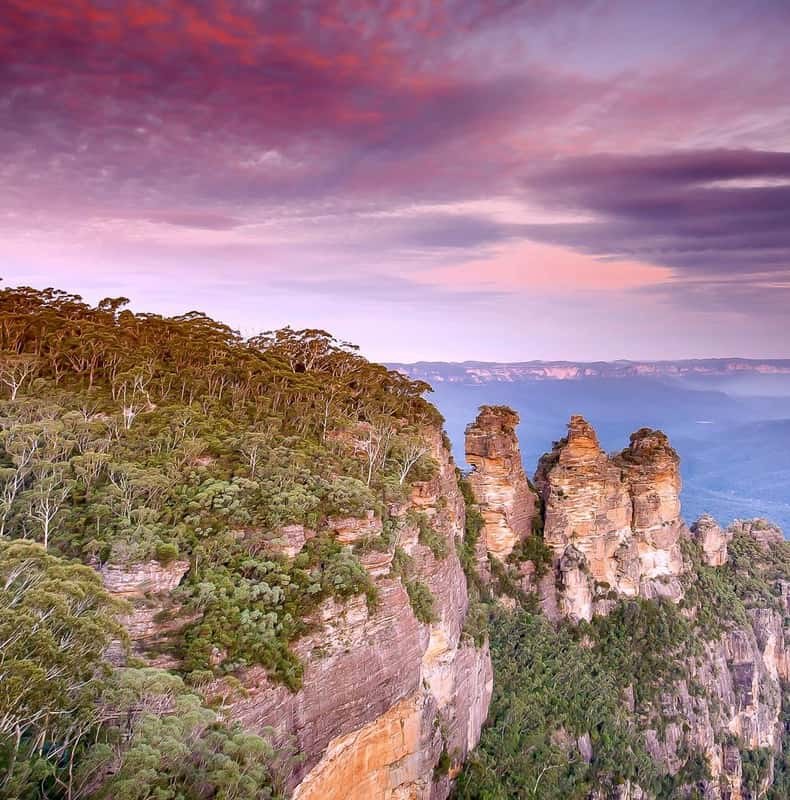
Blue Mountains Sunset Waterfalls Wildlife Tour From Sydney
A late start from George Street that ends in the last hour of light at Lincoln's Rock.
From $113 per person
Check Availability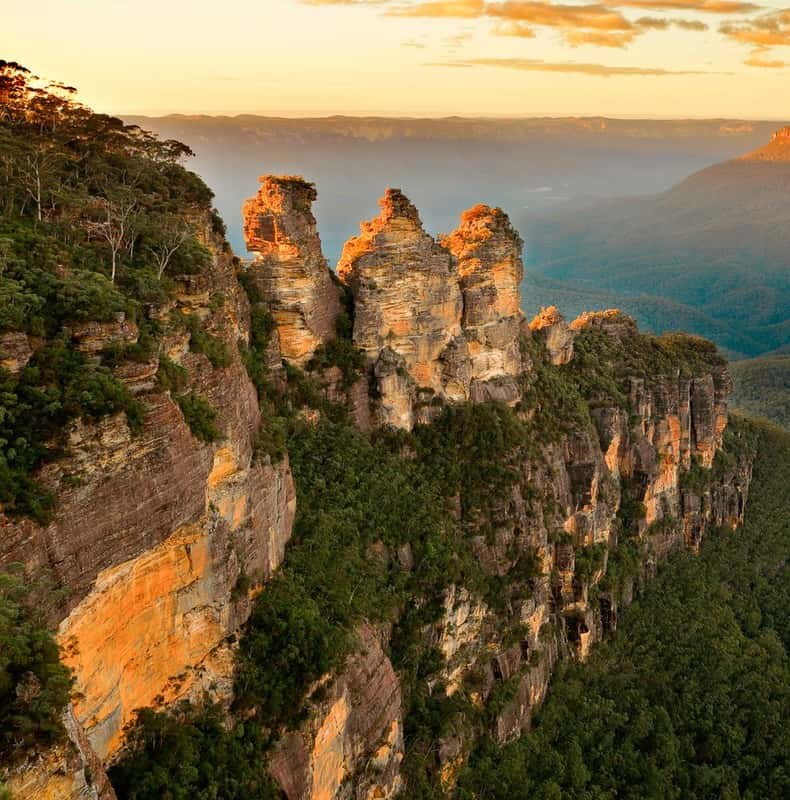
Sydney: Waterfall Bushwalk and Blue Mountain Sunset Day Trip
Two to four kilometres of guided walking, then the Three Sisters at golden hour.
From $129 per person
Check Availability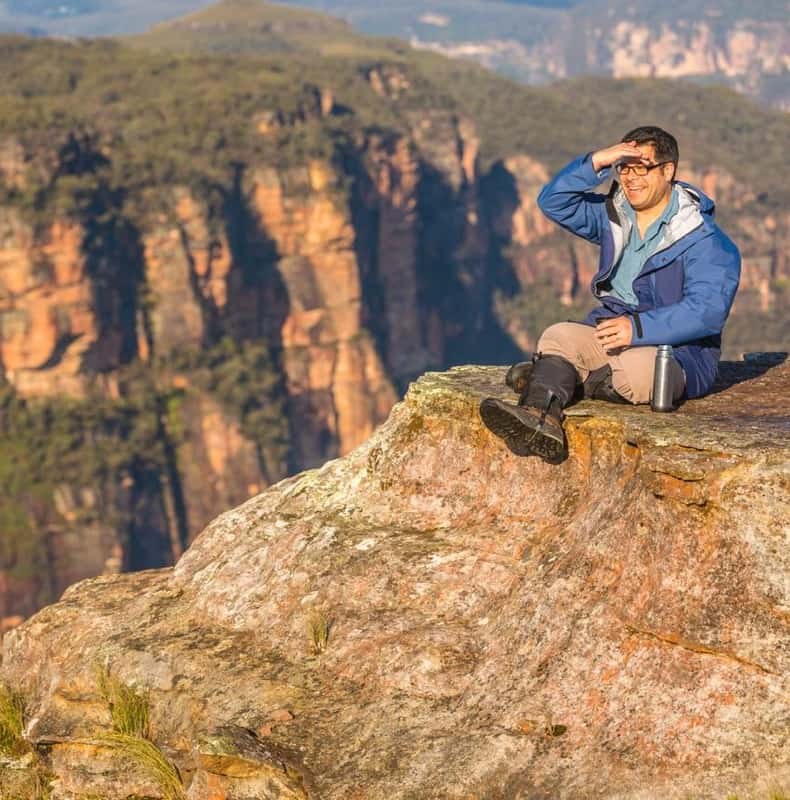
Blue Mountains Wild Kangaroos & Sunset Day Tour - Late Start
Ten travellers at most, wild kangaroos in the Megalong, and cheese and wine at sunset.
From $155 per person
Check Availability
Stargazing with an Astronomer in the Blue Mountains
Ninety minutes at a telescope with an astrophysicist, ten minutes from Katoomba.
From $62 per person
Check Availability