Twelve Surprising Facts About the Blue Mountains
The short answer
The range is blue because of oil in the air, not because of the rock. It holds 96 eucalypt species, 13 per cent of every eucalypt on earth. It hides a pine that was known only from fossils until 1994. And the railway at Katoomba drops at 52 degrees, which its operator bills as the steepest passenger railway in the world.
1. The blue is eucalyptus oil
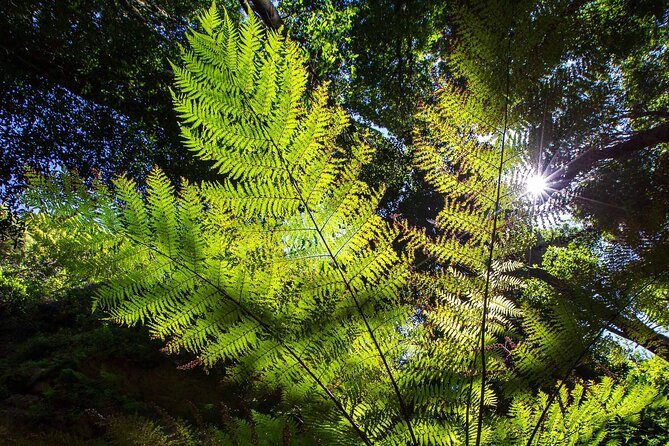
Oil evaporating off the forest scatters short-wavelength light, and the haze it leaves over the ridgelines reads as blue from a distance. The range is named for an optical effect, not for the stone underneath it, which is honey-coloured sandstone up close. It is strongest on warm, still days — which is also when the lookouts are at their best.
2. Ninety-six eucalypt species in one property
NSW Environment and Heritage records 96 eucalypt species inside the Greater Blue Mountains Area: 13 per cent of all eucalypt species on earth, concentrated in a single protected property. That density is the evolutionary case the World Heritage listing rests on. It is also, circularly, the reason for fact number one.
3. A tree known only from fossils, until 1994
The Wollemi pine, Wollemia nobilis, is recorded by NSW Environment and Heritage as occurring within the property. It was known from the fossil record long before anyone found a living stand. Its wild location is not published and it is not somewhere a visitor goes. It is, though, the clearest single answer to why a plateau ninety minutes from a capital city carries a World Heritage listing at all.
4. The listing covers more than a million hectares
The Greater Blue Mountains Area was inscribed in 2000 and spans over one million hectares across eight adjacent conservation reserves. Blue Mountains National Park, the one almost every visitor enters, is only the central block. The others are Wollemi, Gardens of Stone, Kanangra-Boyd, Jenolan Karst, Nattai, Thirlmere Lakes and Yengo — set out in full on the national park page.
5. There is no entry fee, anywhere except one place
For a property of that size the fee structure is a single line: $8 per vehicle per day, in the Glenbrook area only, on weekends, public holidays and school holidays. Everywhere else you drive in, park and pay nothing. Most people assume the opposite, and a good number of pages tell them so.
6. The railway drops at 52 degrees
Scenic World bills its Scenic Railway as the steepest passenger railway in the world, descending into the rainforest at a 52-degree incline. There is also an optional setting that tilts the seats to 64 degrees, which is a decision you make while already sitting in the carriage.
7. The coal under the escarpment is 245 million years old
The National Parks and Wildlife Service dates the coal and shale beds beneath the Katoomba escarpment to between 245 and 290 million years ago. This area held vast swamps and deltas then. What you look at from a lookout is not a mountain that rose but a plateau that was cut: volcanic uplift, then erosion, carving out the Jamison Valley and leaving the Three Sisters standing off its wall.
8. Six nations, and more than one story
The Katoomba area lies within the Country of the Dharug, Gundungurra, Wiradjuri, Darkinjung, Wanaruah and Dharawal People. The Three Sisters is a declared Aboriginal Place. More than one version of the story attached to the formation exists, which is worth knowing before a guide tells you one of them as though it were the only one.
9. It is colder than Sydney every single month
Not just in winter. Bureau of Meteorology averages put Katoomba's maximum below Sydney's in all twelve months, by roughly five degrees, and its overnight minimum lower by closer to six. In July the daytime gap is 6.9 degrees. The whole table is on the weather page, and it is the reason every operator's packing list says the same thing.
10. The Giant Stairway was cut with dynamite
The National Parks and Wildlife Service records the historic Giant Stairway at Echo Point as built with picks, shovels, crowbars and dynamite. It runs down from the Three Sisters walk to Honeymoon Bridge, and on summer weekends there is often a queue to start down it — which is its own kind of monument to how popular the view has become.
11. The most famous caves in the region are shut
Jenolan Caves, one of the eight reserves in the World Heritage property, has been closed since April 2024 while Jenolan Caves Road is rebuilt, with a planned reopening in early 2027. It remains one of the most-searched things about this region, and none of it is currently possible. The Oberon page covers that side of the range.
12. The park may simply close
Blue Mountains National Park is always open, except when it is not. The National Parks and Wildlife Service reserves the right to close it in poor weather or high fire danger, and parts of it close overnight regardless. For an Australian summer that is not a formality. It is also why guided departures run in rain and fog rather than cancelling — weather they can work around, a closed road they cannot.
Where each of these comes from
Every figure above is somebody's published record rather than a well-travelled claim, which on this subject is not a given. Here is which body says what.
| Fact | Source |
|---|---|
| Inscribed 2000, over a million hectares, eight reserves | NSW Environment and Heritage |
| 96 eucalypt species, 13% of the world's | NSW Environment and Heritage |
| The Wollemi pine occurs in the property | NSW Environment and Heritage |
| $8 per vehicle, Glenbrook area only | NSW National Parks and Wildlife Service |
| Coal and shale 245–290 million years old | NSW National Parks and Wildlife Service |
| Six nations; the Three Sisters an Aboriginal Place | NSW National Parks and Wildlife Service |
| The Giant Stairway, cut with picks and dynamite | NSW National Parks and Wildlife Service |
| 52-degree railway, 64 with the tilt | Scenic World |
| Katoomba and Sydney monthly averages | Bureau of Meteorology |
| Jenolan closed since April 2024, reopening early 2027 | Jenolan Caves |
The twelve, in one place
- The blue is eucalypt oil scattering light, not the colour of the rock.
- 96 eucalypt species, 13 per cent of the world's, in one property.
- The Wollemi pine was known only from fossils until 1994.
- Over a million hectares across eight reserves, listed in 2000.
- One vehicle fee, in one area, on some days. Nothing else.
- A passenger railway at a 52-degree incline, 64 if you choose.
- Coal beds 245 to 290 million years old under the escarpment.
- Six nations, a declared Aboriginal Place, and more than one story.
- Colder than Sydney in all twelve months, by about five degrees.
- The Giant Stairway was cut with picks, crowbars and dynamite.
- Jenolan Caves is closed until early 2027.
- The park can close outright for fire or weather.
Want a guide who can explain the rest of it? The best Blue Mountains tours are compared with what each fare covers, and the things-to-do page sorts the options by how long you have.
Twelve facts is a start; a guide who has spent twenty years on this escarpment is a different order of thing, and Blue Mountains Tours compares the ones who have.
Guides who can tell you the rest
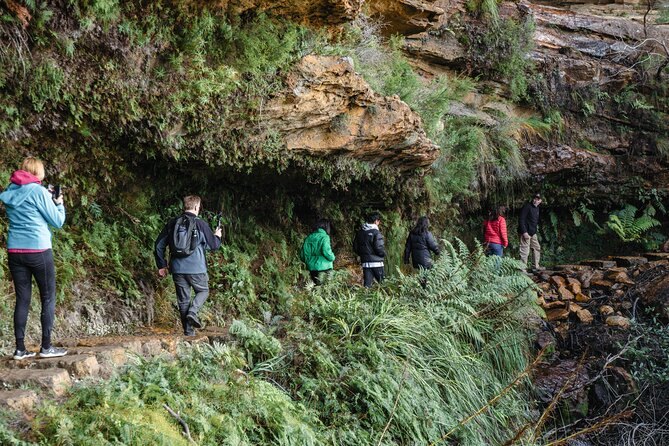
Exclusive Blue Mountains Wildlife and Bushwalk Tour From Sydney
Featherdale entry and an hour of guided bushwalking, with pickup in central Sydney.
From $146 per person
Check Availability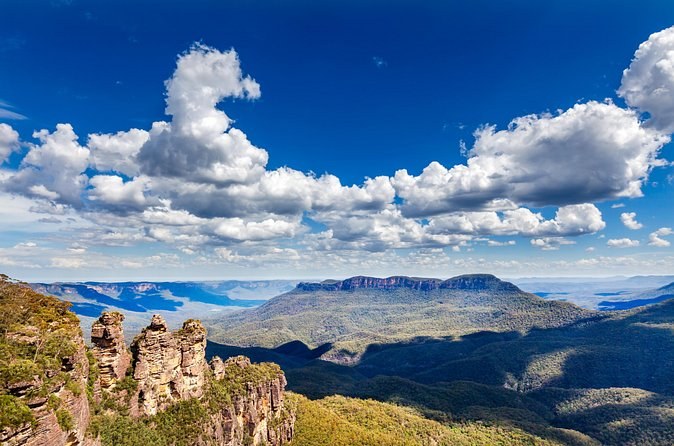
Blue Mountains Day Tour With Bushwalks, Waterfalls & Featherdale
Featherdale, guided bushwalks and an hour of your own in Leura or Katoomba.
From $146 per person
Check Availability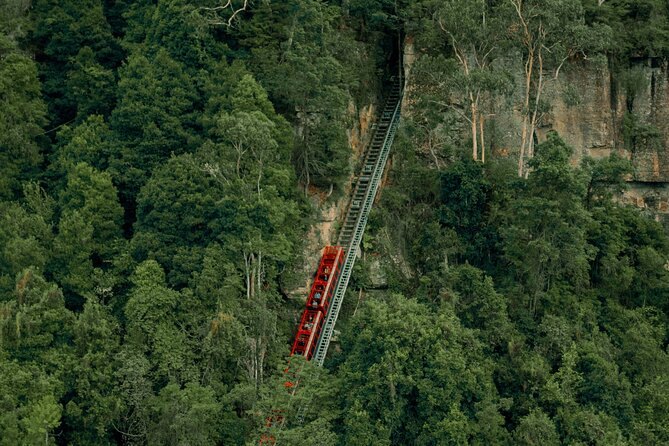
Depart Syd: Blue Mountains Best All Inclusive with Local Guide
Scenic World, a wildlife park, lunch and the ferry home, all inside one fare.
From $209 per person
Check Availability